Joint labor-management apprenticeship
Learn the systems. Build the skill on the roof.
Local 106 apprentices learn the craft on the job under proper supervision and study the technical subjects behind modern roofing and waterproofing.
How apprenticeship works
One craft. Two connected classrooms.
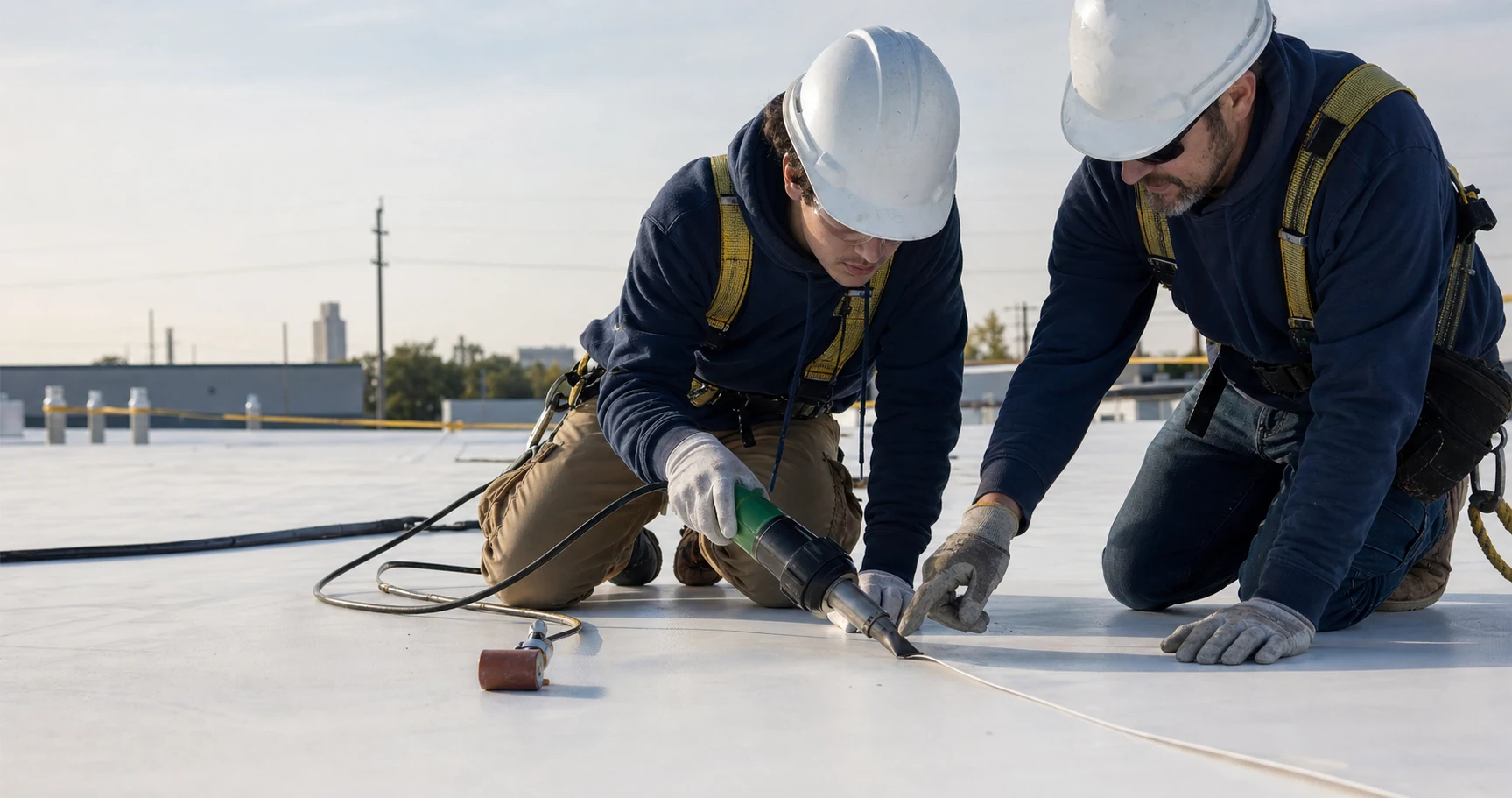
The strongest training happens when supervised field experience and technical study reinforce each other.
A career built by doing
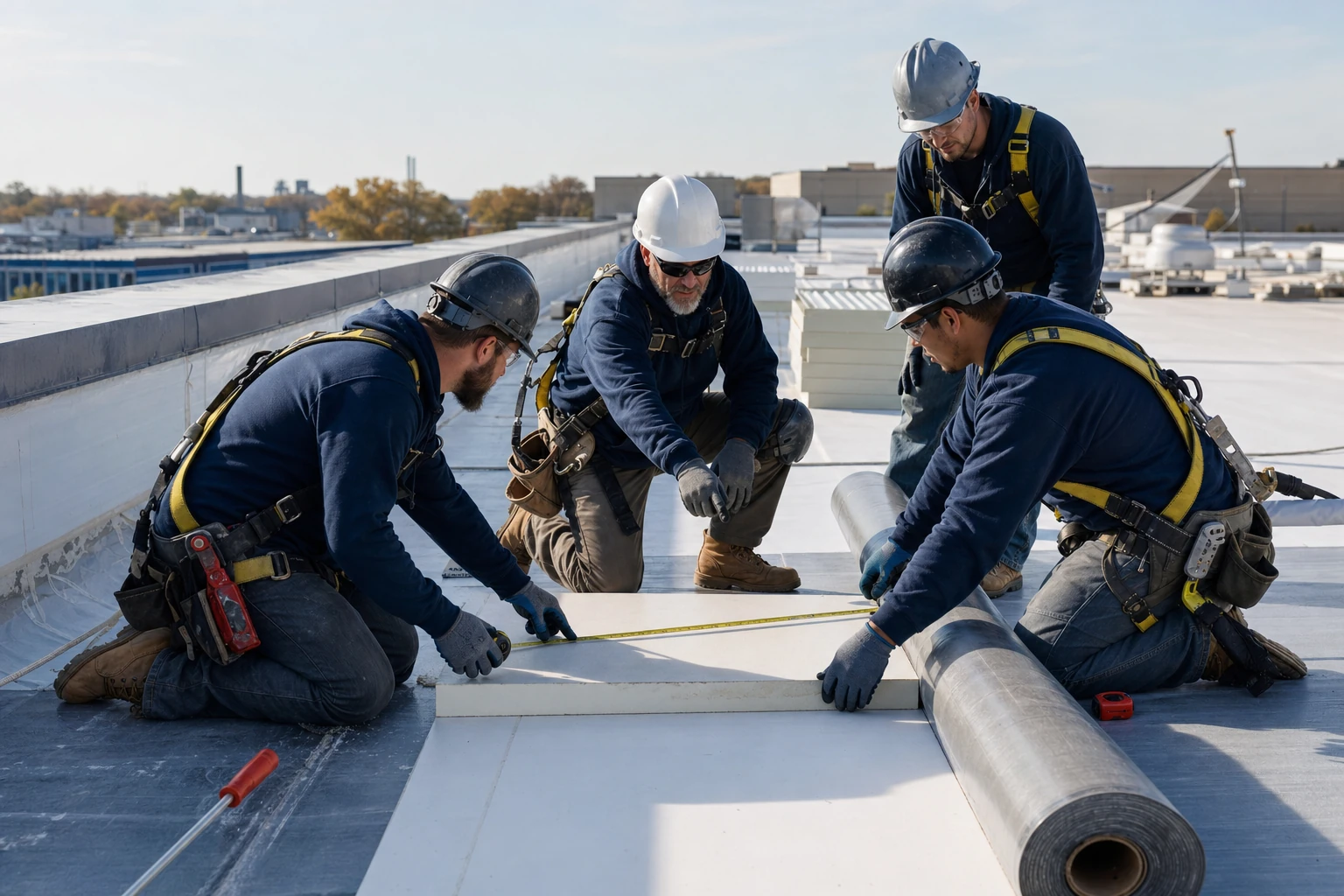
Training that connects knowledge to the work.
Local 106’s apprenticeship program is sponsored jointly by labor and management at the local union level. It helps employers build a highly skilled workforce capable of applying quality roofing and waterproofing systems that keep Southwest Indiana’s and Kentucky's buildings dry.
-
01
On the job
Learn under proper supervision.
Build practical skill on active roofing and waterproofing work while experienced professionals teach safe habits, system preparation, installation, detailing, and quality control.
-
02
Related instruction
Understand why every detail matters.
Study the technical subjects behind the trade so field decisions are grounded in material knowledge, building protection, safety, and proven installation practices.
The work you will learn
Five systems. One purpose: keep water out.
Union roofers and waterproofers protect buildings and their contents from water intrusion and structural damage.
BUR / SYSTEM 01
Commercial + industrialBuilt-up roofing
In commercial and industrial roofing, layers—or plies—of felt are set in hot bitumen over insulation boards to form a waterproof membrane. Aggregate may be embedded in the final bitumen coat to protect the membrane from ultraviolet radiation and other environmental hazards.
SP / SYSTEM 02
Membrane systemsSingle-ply roofing
Single-ply roofing includes plastic, thermoplastic polyolefin (TPO), rubber (EPDM), and other elastoplastic membranes. Seams are welded with solvent or hot air, or bonded with contact adhesive, to create one continuous waterproofing membrane.
Systems may use stone, rock, or paver ballast, or they may be partially or fully adhered to the substrate. They are commonly installed over roof insulation boards.
MB / SYSTEM 03
Reinforced sheetsModified bitumen
Modified bitumen is a separate category of roofing system. Depending on the specified assembly, it may be applied with hot bitumen or torched on with high-intensity propane burners.
RS / SYSTEM 04
Steep-slope workResidential roofing
Residential work includes composition shingles, slate, tile, and metal roofs. These applications may also be used in commercial and industrial construction.
WP / SYSTEM 05
Moisture protectionBuilding waterproofing
Waterproofing is as important as the roof in protecting a building from moisture intrusion. It can be installed below grade for foundation work, on plaza decks, on parking-garage floors, and anywhere dependable moisture protection is crucial.
Many waterproofing materials are related to roofing products, while other applications call for specialized materials.
per hour
Louisville, KY Range $20–$31per hour
Excluding benefits. Contact the hall for current wage and eligibility information.How much would I earn?
Earn wages while learning the trade.
Union roofers, waterproofers, and allied workers receive wages and fringe benefits negotiated on their behalf by Local 106 through collective bargaining with roofing contractors.
Fringe benefits can include health and welfare contributions, pensions that help secure retirement, and annuities. Rates and eligibility can change, so contact the Local 106 office for the current wage sheet and plan details.
- 01Health and welfare contributions
- 02Pension and retirement support
Take the first step
Bring your work ethic. We will help build the skill.
Use the quick application to share your contact information and experience, or call the hall with questions about local qualifications and scheduling.